
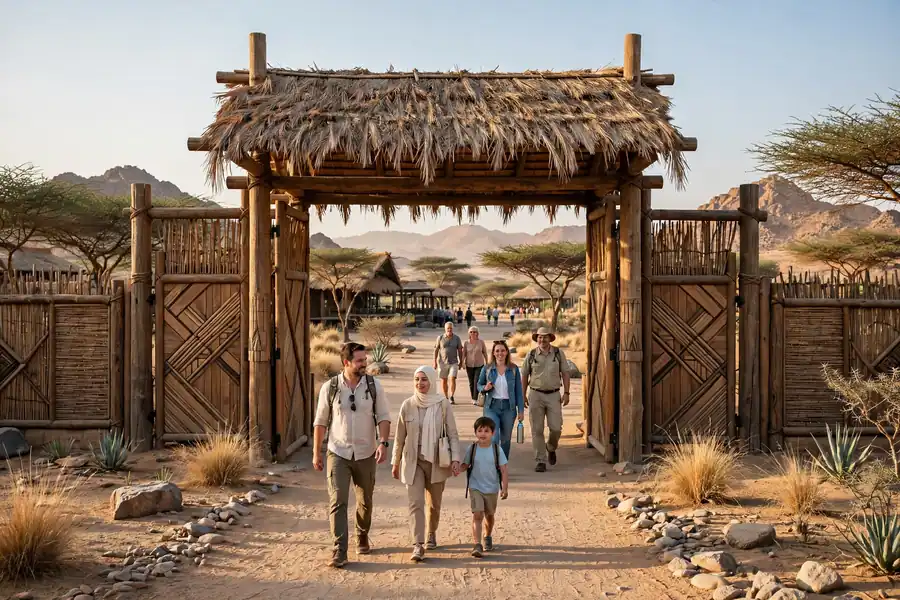
If Dubai Safari Park is a city wildlife day out, Sharjah Safari Park is the opposite kind of day: a full desert safari in Al Dhaid, built around real African landscapes, where the ticket you buy decides how much of the park you actually see. That last point matters more here than anywhere else in the UAE. A Bronze ticket and a Gold ticket do not just cost different amounts — they open different zones, different vehicles, and a different length of day.
Sharjah Safari Park sits in Al Bridi Nature Reserve in Al Dhaid, about 49 kilometres from Sharjah city. It opened on 17 February 2022 and is run by Sharjah’s Environment and Protected Areas Authority (EPAA) as a conservation and breeding project, with a focus on rare and endangered species. Across 12 African-inspired environments it holds more than 120 species, from elephants and giraffes to lions, rhinos, crocodiles and flamingos, spread over 8 square kilometres of safari land.
Sharjah Safari Park at a Glance
Location: Al Bridi Nature Reserve, Al Dhaid, Sharjah — Sharjah–Khorfakkan Road (E55). Timings: Daily 8:30 AM – 6:00 PM. Last entry trap: Silver and Gold tickets stop at 1:30 PM, last tour departure 2:00 PM; Bronze stops at 4:00 PM. Bronze: Adult AED 40, child AED 15 — walking tour, 2–3 hours. Silver: Adult AED 120, child AED 50 — shared safari vehicle, 5–6 hours. Gold: Adult AED 275, child AED 120 — luxury vehicle, private guide, Serengeti walking, 5–6 hours. Under 3: Free on all tickets. Zones: 12 African environments. Booking: Online at sharjahsafari.ae or at the venue.
Sharjah Safari Park Tickets: Bronze, Silver and Gold Explained
Do not choose by price alone. Choose by the zones you want to see, and by how late you can arrive.
Bronze is a walking ticket. For AED 40 for adults (12 years and over) and AED 15 for children aged 3 to 12, you walk through the entrance environments at your own pace: Birds of Africa, East African Islands, Boma African Farm and Zanzibar Village. It takes two to three hours, and it is a good option if you only want a shorter visit, or if you are travelling with very young children who will not sit through a five-hour safari.
Silver is the ticket most first-time visitors should buy. For AED 120 for adults and AED 50 for children, you get a seat on a shared safari vehicle that covers the big open habitats — Niger Valley, Sahel, Moremi, Savannah, Ngorongoro, Kalahari and Tswalu — plus a bird show and a stop at Safari Camp. The whole experience takes five to six hours. Silver does not include the Serengeti walking safari. That is Gold only.
Gold is for visitors who want everything and a guide of their own. For AED 275 for adults and AED 120 for children, you get everything in Silver, plus a luxury vehicle, a private guide, and a guided walking safari through the Serengeti habitat. Private safari options start from AED 1,500 for a group of six people.
| Ticket | Adult (12+) | Child (3–12) | What you get | Time needed |
|---|---|---|---|---|
| Bronze | AED 40 | AED 15 | Walking: Birds of Africa, East African Islands, Boma, Zanzibar Village | 2–3 hours |
| Silver | AED 120 | AED 50 | Shared safari vehicle: Niger Valley, Sahel, Moremi, Savannah, Ngorongoro, Kalahari, Tswalu + bird show + Safari Camp | 5–6 hours |
| Gold | AED 275 | AED 120 | All Silver zones + luxury vehicle + private guide + Serengeti walking safari | 5–6 hours |
| Under 3 | Free | Free | Free on all tickets | — |
Timings and the Last-Entry Trap
Sharjah Safari Park is open daily from 8:30 AM to 6:00 PM in Season 5. That headline timing hides the detail that ruins visits: Silver and Gold tickets are only sold until 1:30 PM, and the last Silver and Gold tour departs at 2:00 PM. Bronze tickets are sold until 4:00 PM.
If you arrive at 3:00 PM hoping for a safari vehicle tour, you will be too late, even though the park is still open. Plan backwards from 1:30 PM, not from 6:00 PM. Aim to arrive by 9:30 AM at the latest for Silver or Gold, and at 8:30 AM if you want the animals at their most active and the best light for photography. The park is a summer-closure park too — it closes in the hottest months — so check reopening dates before a summer plan.
The 12 Environments, Grouped by Ticket
The park is not a zoo with cages in a row. It is 12 environments modelled on real African landscapes, and which ones you see depends on your ticket.
Walking environments (all tickets)
Birds of Africa is a large aviary experience, and it is the first environment most visitors meet. East African Islands recreates island habitats, including Madagascar and Aldabra influences. Boma African Farm shows a traditional farm setting, and Zanzibar Village adds African town architecture, cafes and shops overlooking lakes and habitats. These four are included in Bronze, Silver and Gold, so every visitor sees them.
Safari vehicle environments (Silver and Gold)
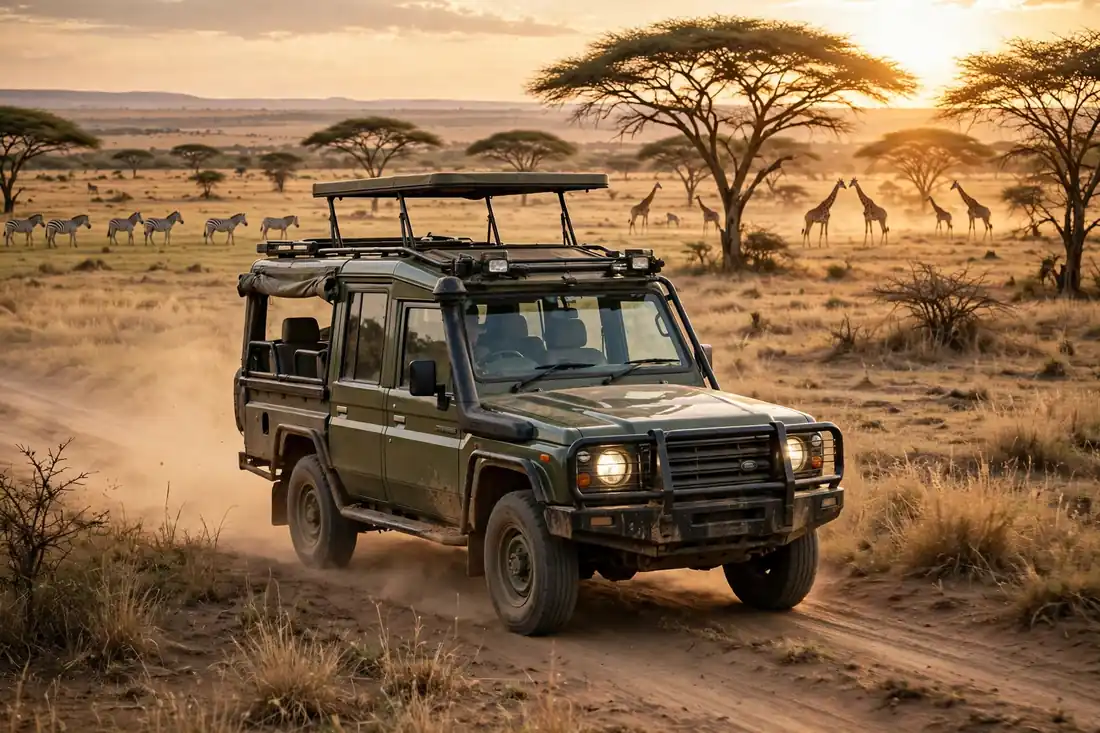
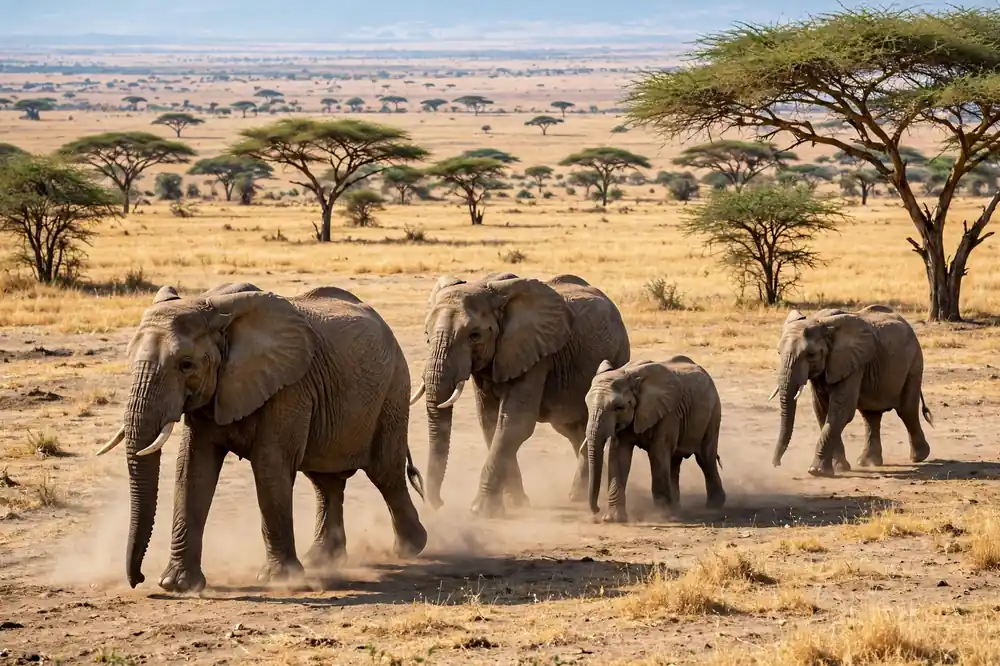
Once you board the safari vehicle, the scale changes. Niger Valley, Sahel, Moremi, Savannah, Ngorongoro, Kalahari and Tswalu are large open habitats where herds and predators live across wide landscapes rather than in small enclosures. Look for elephants in Niger Valley, giraffes and zebras across the savannah areas, lions and cheetahs in Savannah, and rhinos in Ngorongoro and Moremi. The vehicle stops at Safari Camp halfway through, and a bird show is part of the Silver and Gold day.
Serengeti (Gold only)
Serengeti is the exception that makes Gold different. It is a guided walking safari through open grassland, where wildebeest herds, giraffes, zebras and lions live across wide plains. Silver ticket holders do not enter it on foot. If the Serengeti walk is the reason you came, buy Gold — do not buy Silver and hope to add it on the day.
Animals You Will Actually See
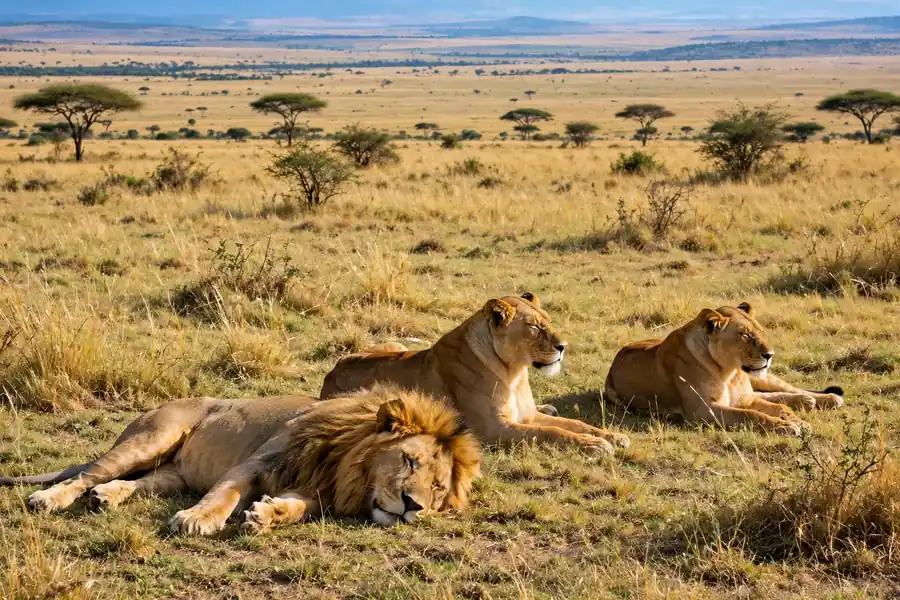
Expect giraffes, elephants, lions, rhinoceroses (including black rhinos in Moremi), crocodiles, zebras, antelopes, gazelles, deer and a large number of birds, including flamingos. The park is also known for its giraffe herd, including Bridi, the first African female giraffe born at Sharjah Safari, and for its conservation breeding work. Animal sightings still depend on time of day and weather — early morning in winter is consistently better than a hot afternoon, when many animals rest in shade.
How to Reach Sharjah Safari Park
Sharjah Safari Park is in Al Dhaid, not in Sharjah city centre, so allow a proper drive. From Emirates Road (E611), take Exit 77 onto Sharjah–Khorfakkan Road (E55), then drive about 30 kilometres. As you pass Al Dhaid cricket ground on your left, look for the Sharjah Safari exit on your right and follow the signs to the entrance. From Sharjah city it is about 49 kilometres in total; from Dubai, allow well over an hour depending on traffic, and longer on weekends.
Private vehicles are not allowed inside the reserve. Park in the designated lot and use the provided safari vehicles (Silver) or luxury vehicles (Gold). There is no metro to Al Dhaid, so a car or a tour transfer is the practical way to get there. If you are coming from Ras Al Khaimah, the drive is about 72 kilometres and around one hour and five minutes.
Best Time, Route and Rules
The best time to visit is October to March, in the morning. Arrive at 8:30 AM, start with the walking environments, then board your safari vehicle, and use Safari Camp as your midday break. Bring a hat, sunscreen, sunglasses, comfortable walking shoes, binoculars and a reusable water bottle. Outside food and drinks are generally not allowed, but Zanzibar Village and Safari Camp have themed cafes and restaurants.
Children aged 3 to 12 must be accompanied by an adult, children under 3 enter free, modest dress is recommended, and pets are not allowed. Do not feed animals outside a staff-run encounter, and follow guide instructions on vehicle tours and walking safaris.
If you want to pair the safari with another Sharjah stop, Mleiha Archaeological Centre is about 18 kilometres away, and our Sharjah Desert Park guide covers a different kind of Sharjah wildlife day. For a Dubai comparison, our Dubai Safari Park guide shows how the two safari parks differ — Dubai’s park is a city park with six zones, Sharjah’s is a desert reserve with twelve African environments and a ticket system that decides your day.
Frequently Asked Questions
How much is a Sharjah Safari Park ticket?
Bronze is AED 40 for adults and AED 15 for children aged 3 to 12. Silver is AED 120 for adults and AED 50 for children. Gold is AED 275 for adults and AED 120 for children. Children under 3 enter free on all tickets.
What are Sharjah Safari Park timings?
The park is open daily from 8:30 AM to 6:00 PM. Silver and Gold tickets stop at 1:30 PM and the last tour departs at 2:00 PM. Bronze tickets are available until 4:00 PM.
Where is Sharjah Safari Park located?
It is in Al Bridi Nature Reserve in Al Dhaid, Sharjah, on Sharjah–Khorfakkan Road (E55), reached via Exit 77 on Emirates Road (E611), then about 30 kilometres on E55.
What is the difference between Bronze, Silver and Gold?
Bronze is walking only through four entrance environments. Silver adds a shared safari vehicle through seven open habitats, a bird show and Safari Camp. Gold adds a luxury vehicle, a private guide and the Serengeti walking safari.
Can I drive my own car inside Sharjah Safari Park?
No. Private vehicles are not allowed inside the reserve. Park at the entrance lot and use the park’s safari vehicles or luxury vehicles.
When is the best time to visit Sharjah Safari Park?
October to March, arriving at 8:30 AM. Animals are most active in the cooler morning hours, and Silver and Gold tours have a 1:30 PM last-entry cut-off, so a late start loses the safari vehicle day.
Final Thoughts
Sharjah Safari Park is worth the drive to Al Dhaid, but only if you buy the ticket that matches the day you want. Bronze is a pleasant walk. Silver is the full safari vehicle day most visitors want. Gold is the only way into Serengeti on foot. Whatever you choose, arrive early, respect the 1:30 PM Silver and Gold cut-off, and check the official Sharjah Safari website before you travel for any Season 5 change to timings or prices.